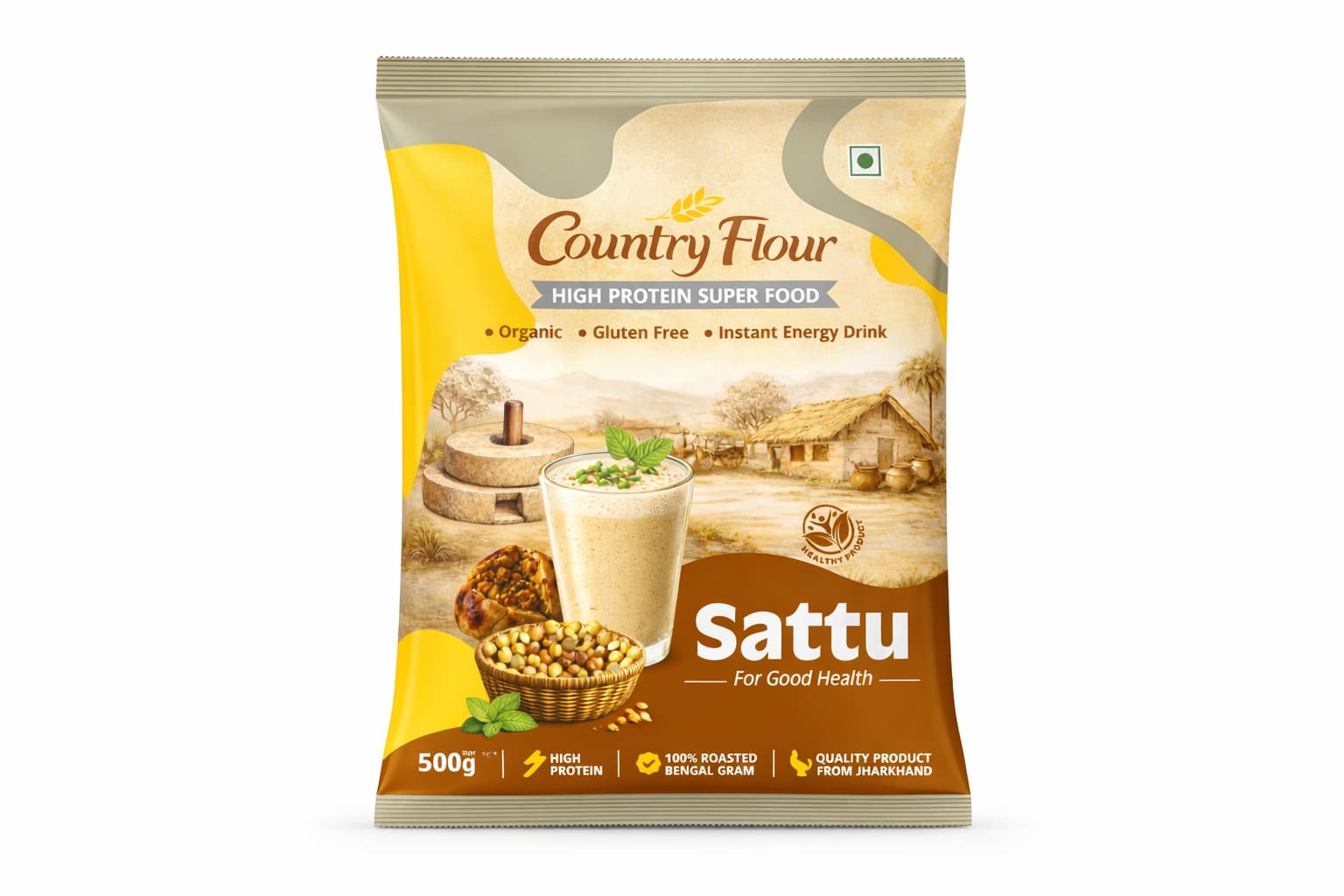
Sattu vs Besan
Published
Sattu vs Besan: What's the Difference?
Sattu and besan may look similar, but they are not the same ingredient. Both are commonly associated with Bengal gram or chana, but their preparation and culinary characteristics are different.
Feature Sattu Besan
Main ingredient Usually roasted chana Usually chana dal
Preparation Roasted before grinding Generally ground without roasting
Flavour Nutty and roasted Mild, earthy
Common uses Sharbat, litti, paratha Pakora, cheela, kadhi
Traditional association Bihar, Jharkhand, UP Widely used across India
Why Does Sattu Taste Different?
The biggest reason is roasting. Roasting changes the flavour and aroma of the chana, giving sattu its characteristic roasted taste.
Besan has a comparatively mild flavour and is widely used as a cooking and frying ingredient.
Can You Substitute Besan for Sattu?
Not always.
If a recipe specifically depends on the roasted flavour of sattu, such as traditional litti stuffing or sattu sharbat, replacing it with besan will produce a different result.
Similarly, sattu is not always a direct substitute for besan in recipes such as pakoras.
Which One Should You Choose?
It depends on what you are making.
Choose sattu for traditional drinks, litti, sattu paratha and recipes where roasted chana flavour is important.
Choose besan for pakoras, cheela, kadhi and other recipes traditionally prepared with besan.
Both have their own place in Indian cooking.
Sattu and besan may look similar, but they are not the same ingredient. Both are commonly associated with Bengal gram or chana, but their preparation and culinary characteristics are different.
Feature Sattu Besan
Main ingredient Usually roasted chana Usually chana dal
Preparation Roasted before grinding Generally ground without roasting
Flavour Nutty and roasted Mild, earthy
Common uses Sharbat, litti, paratha Pakora, cheela, kadhi
Traditional association Bihar, Jharkhand, UP Widely used across India
Why Does Sattu Taste Different?
The biggest reason is roasting. Roasting changes the flavour and aroma of the chana, giving sattu its characteristic roasted taste.
Besan has a comparatively mild flavour and is widely used as a cooking and frying ingredient.
Can You Substitute Besan for Sattu?
Not always.
If a recipe specifically depends on the roasted flavour of sattu, such as traditional litti stuffing or sattu sharbat, replacing it with besan will produce a different result.
Similarly, sattu is not always a direct substitute for besan in recipes such as pakoras.
Which One Should You Choose?
It depends on what you are making.
Choose sattu for traditional drinks, litti, sattu paratha and recipes where roasted chana flavour is important.
Choose besan for pakoras, cheela, kadhi and other recipes traditionally prepared with besan.
Both have their own place in Indian cooking.