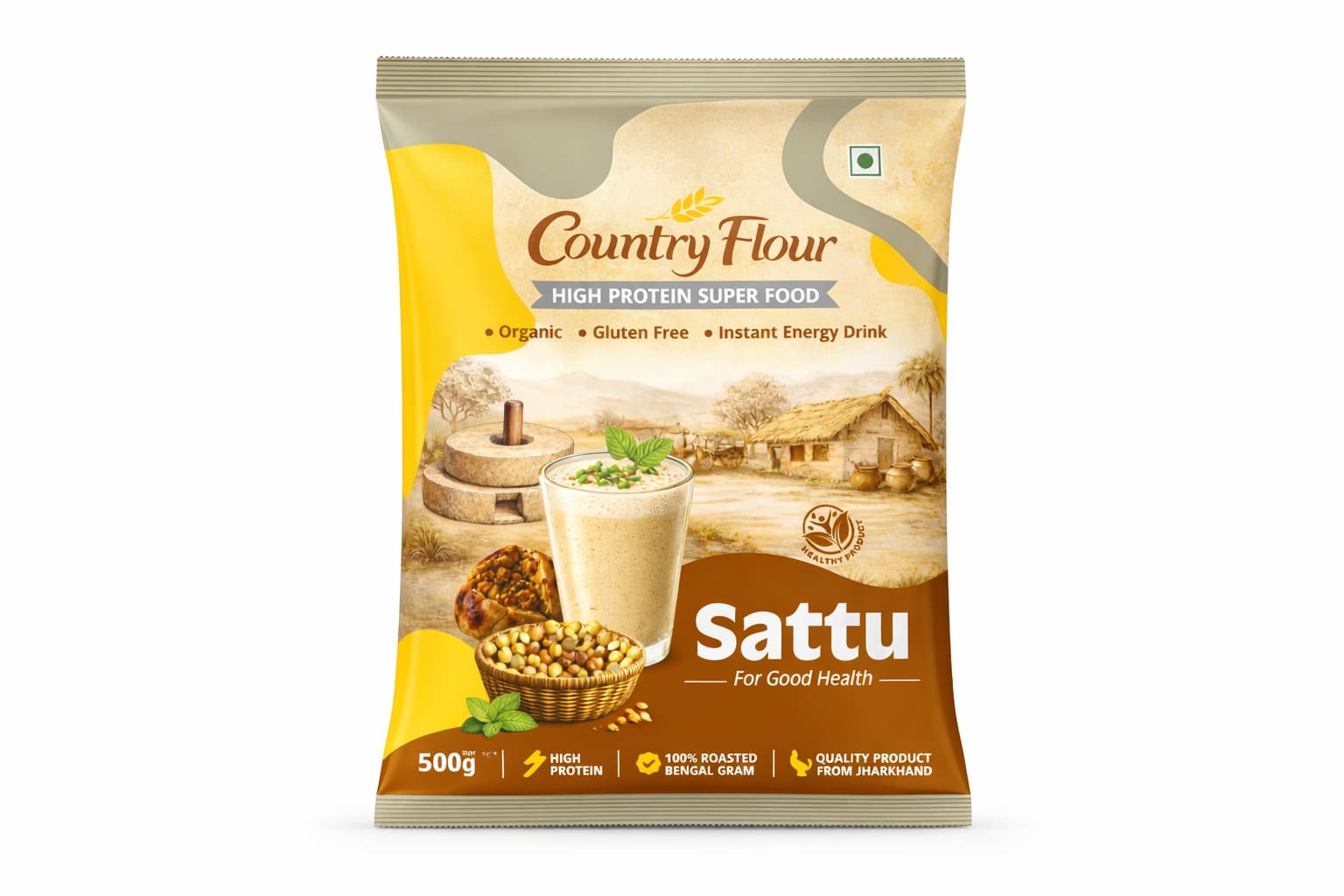
How Sattu is Made
Published
How is Sattu Made?
Traditional chana sattu is made by roasting Bengal gram and grinding it into a fine flour.
While the process is simple in principle, proper roasting and grinding are important for achieving the familiar flavour, aroma and texture of sattu.
Step 1: Selecting Chana
Good-quality Bengal gram is selected as the primary ingredient.
Step 2: Roasting
The chana is roasted until it develops its characteristic aroma and flavour.
Roasting is the most important step that differentiates traditional sattu from ordinary chana flour.
Step 3: Cooling
The roasted chana is allowed to cool before grinding.
Step 4: Grinding
The roasted chana is ground into a fine powder.
Step 5: Sieving
The flour can be sieved to achieve a consistent texture.
Step 6: Packing
Once prepared, sattu is packed properly to protect it from moisture and preserve its freshness.
Why Does Roasting Matter?
Roasting develops the nutty flavour and aroma associated with sattu.
The resulting flour can be used in beverages, stuffed breads, snacks and traditional recipes.
From roasted chana to a versatile flour, the basic process of making sattu reflects the simplicity of traditional Indian food preparation.
Traditional chana sattu is made by roasting Bengal gram and grinding it into a fine flour.
While the process is simple in principle, proper roasting and grinding are important for achieving the familiar flavour, aroma and texture of sattu.
Step 1: Selecting Chana
Good-quality Bengal gram is selected as the primary ingredient.
Step 2: Roasting
The chana is roasted until it develops its characteristic aroma and flavour.
Roasting is the most important step that differentiates traditional sattu from ordinary chana flour.
Step 3: Cooling
The roasted chana is allowed to cool before grinding.
Step 4: Grinding
The roasted chana is ground into a fine powder.
Step 5: Sieving
The flour can be sieved to achieve a consistent texture.
Step 6: Packing
Once prepared, sattu is packed properly to protect it from moisture and preserve its freshness.
Why Does Roasting Matter?
Roasting develops the nutty flavour and aroma associated with sattu.
The resulting flour can be used in beverages, stuffed breads, snacks and traditional recipes.
From roasted chana to a versatile flour, the basic process of making sattu reflects the simplicity of traditional Indian food preparation.